Carpaal
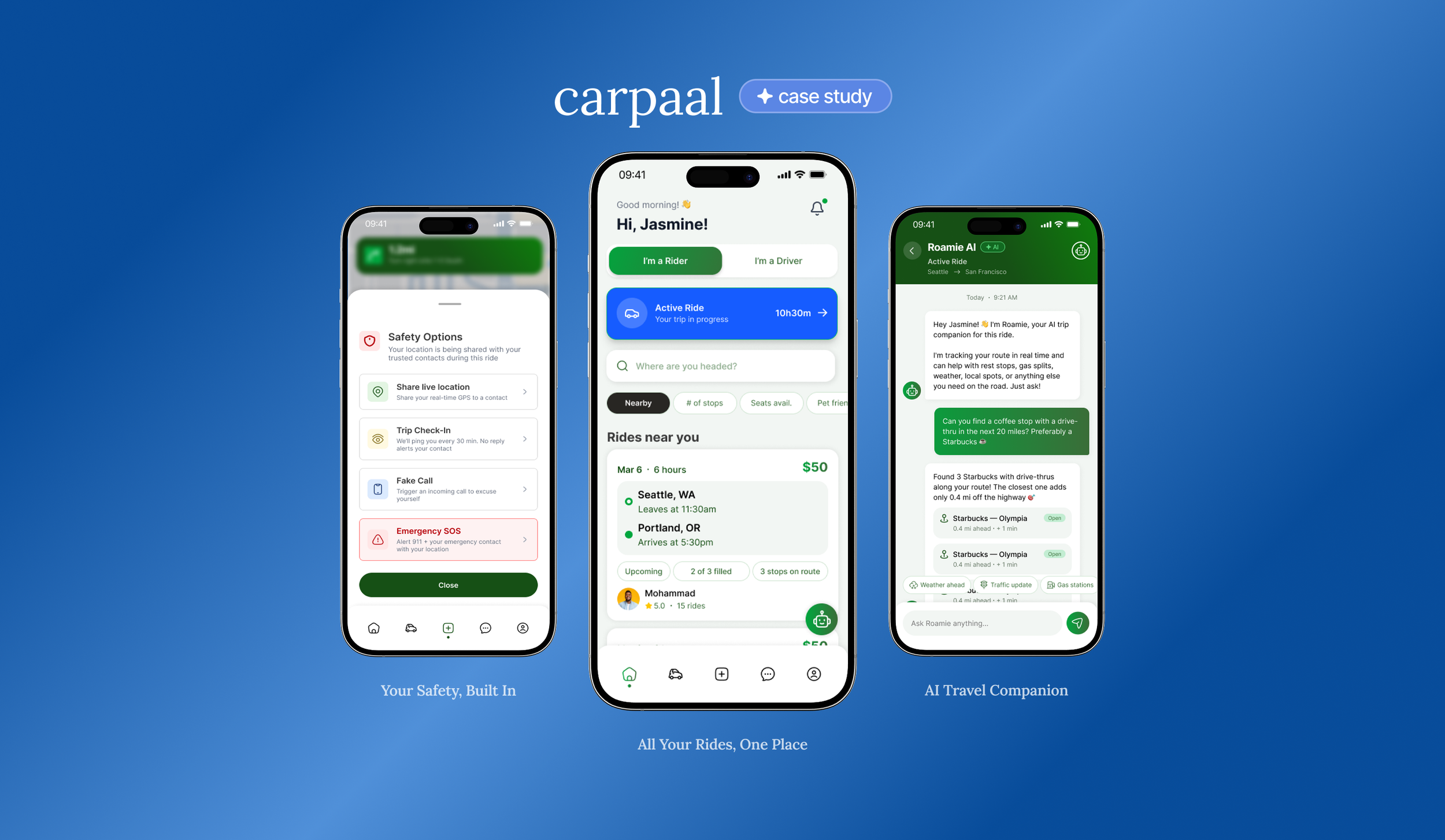
A community-driven ride-sharing app that makes finding safe, reliable rides simple.
Team:
Sole UX designer
Tools:
Figma, FigJam, Survey Monkey, Slack
Focus:
AI Integration, Safety UX,
End-to-End Mobile Design
Duration:
4 months
Project Overview
Carpaal is a pre-seed startup rethinking ridesharing as a safer, more community-driven alternative. I worked as the sole UX designer, leading the product from research through final UI design.
How Might We:
How might we transition users from "anonymous strangers" to "verified neighbors"?
How might we transform chaotic posts into a searchable, AI-matched database?
How might we ensure riders don't just find a car, but find a compatible community member?
Peer-to-peer ridesharing in the U.S. is fragmented, with many users relying on informal social media groups that lack safety, trust, and reliability. Most existing platforms also feel transactional rather than community-driven.
The Challenge
My Process
I started by understanding Carpaal’s business goals and working closely with the CEO to define the target audience.
From there, I explored users’ pain points, wants, and needs, while auditing competitors and regional social media forums to identify gaps in the current ridesharing experience.
Key Gaps
The Discovery Gap: Ride information is buried in random threads, making it difficult and time-consuming to find a ride.
The Security Void: Anonymous, open-access groups create uncertainty and make users feel less safe connecting with others.
Transactional Creep: Community-based groups can shift toward professional, profit-seeking services, losing the sense of community.
“I’ve thought about carpooling to save money, but I’m terrified of just getting into a stranger’s car without knowing who they are.”
“The biggest challenge is coordinating schedules. Sometimes people cancel last minute or it’s hard to find someone going to the same place at the same time.”
“I spend more time scrolling through Facebook threads looking for a ride than the actual ride takes. It’s exhausting.”
The Solution
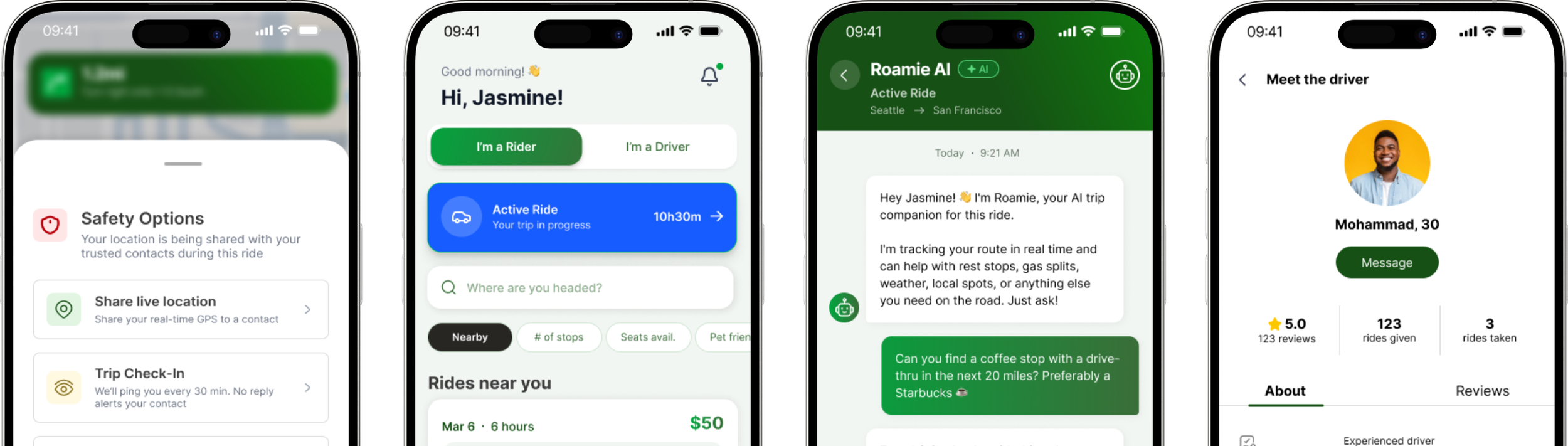
Proprietary UI has been simplified/omitted per NDA.
Safety Prioritization
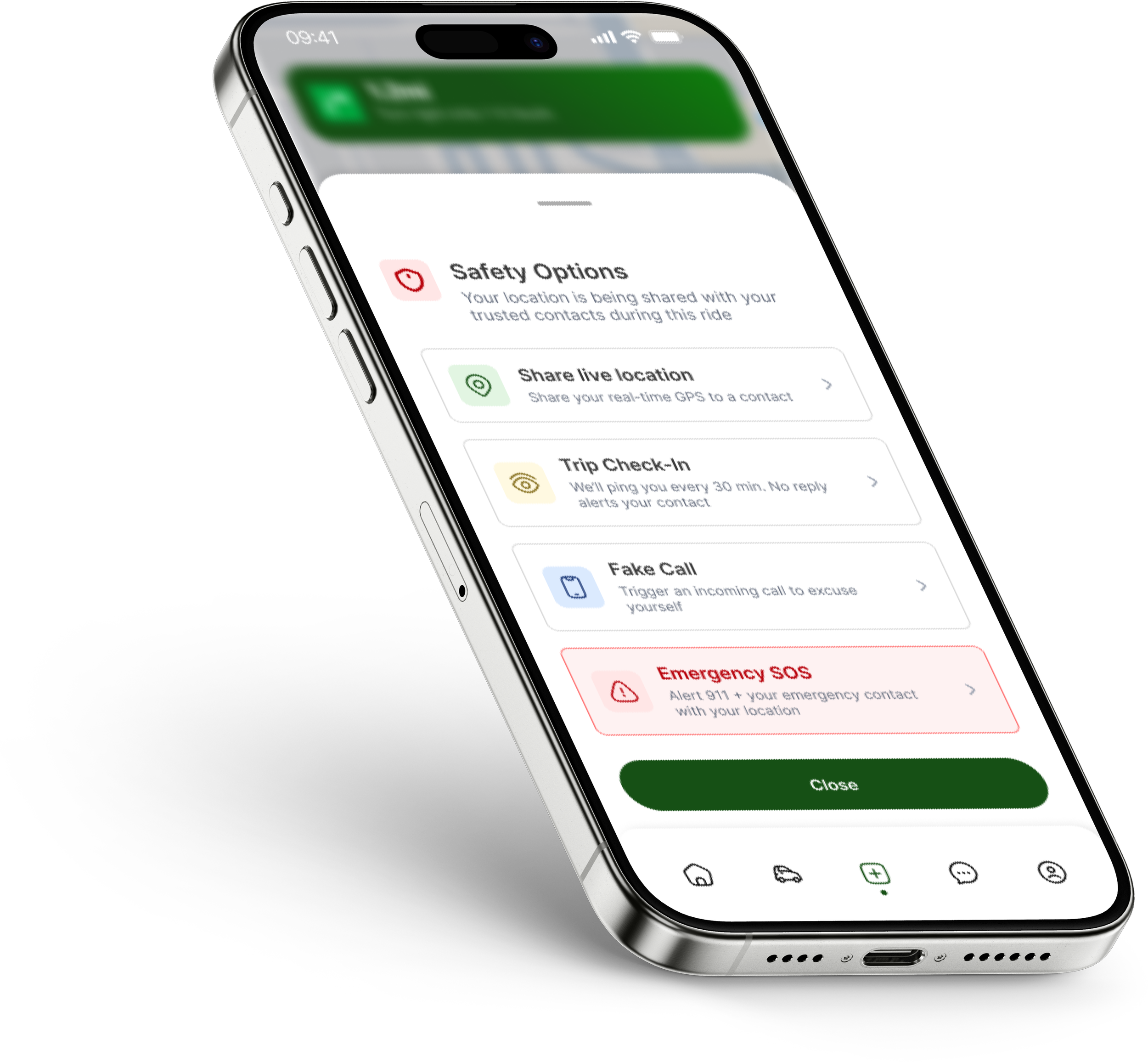
Trust: ID verification, background checks, and user reviews enhances safety and transparency.
Safety: Gender-specific filtering and AI-powered safety features (such as emergency alerts, route deviation detection, and quick safety check-ins) provide users with added security and peace of mind.
Why It Matters: Safety concerns and difficulty verifying users was the top concern for women and first-time riders.
AI Smart Matching
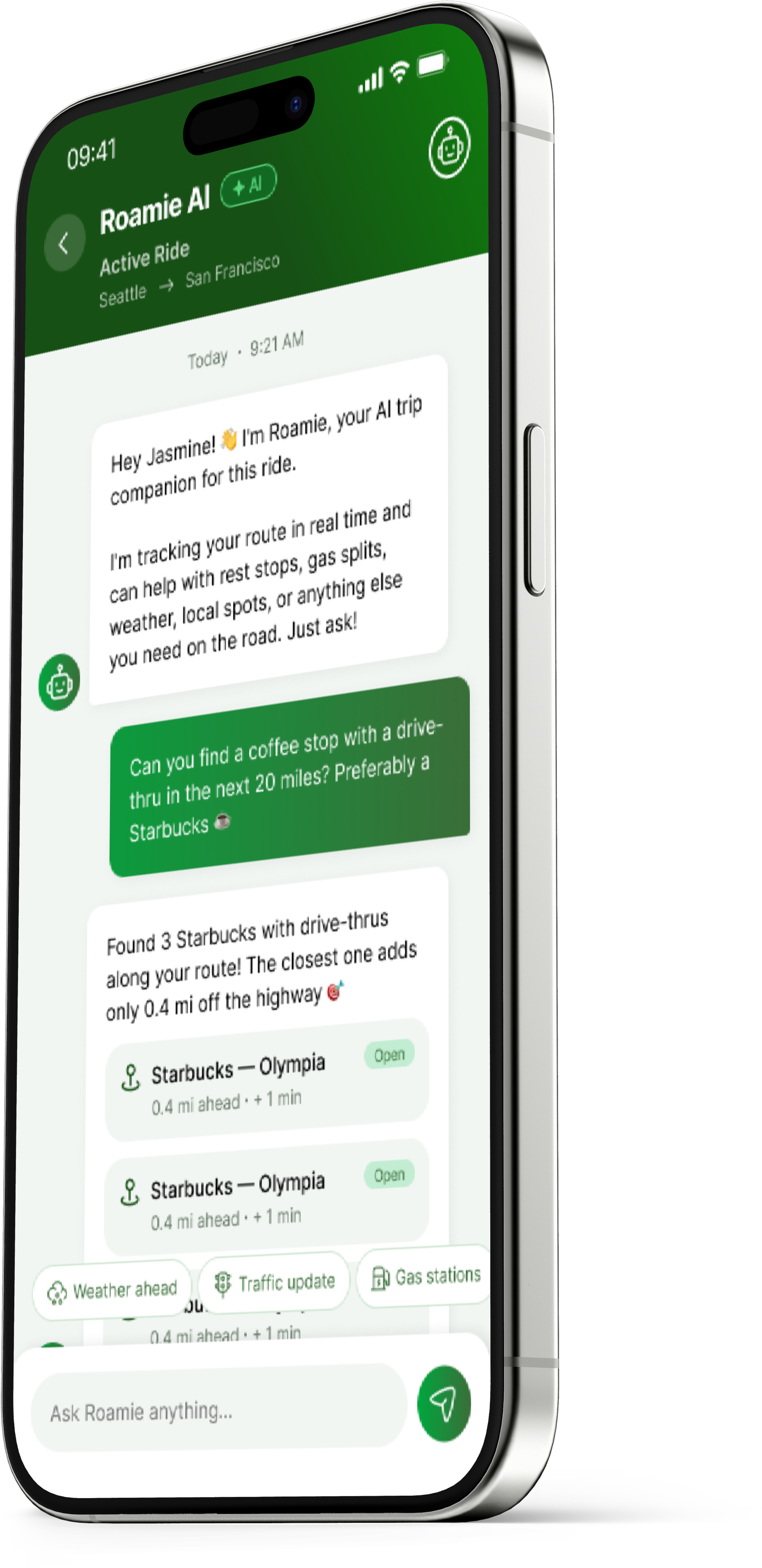
Vibe Matching: Users can match based on shared music tastes, personality traits, conversation preferences (quiet vs. chatty), and temperature preferences to create a more comfortable ride experience.
Rapport Building: Integrated messaging with lighthearted prompts encourages pre-ride conversation, helping users feel more comfortable with their travel companion before the trip begins.
Why It Matters: Users often felt awkward riding with strangers. This system helps reduce uncertainty by letting riders learn more about each other beforehand, making interactions more natural, reducing cancellations, and improving the overall experience.
AI Direction: An AI element was requested by the stakeholder, which led to the development of vibe matching. It’s designed around the question of what would encourage users to return more frequently through more personalized and compatible ride experiences.
Outcomes & Impact
Increased User Confidence: Testing showed that 40% of participants felt significantly more secure compared to coordinating rides through social media communities, especially due to verification and built-in safety features.
Faster Ride Discovery: Vibe Matching and improved filtering reduced the time needed to find a compatible ride from several minutes of scrolling to under 30 seconds.
Stronger Retention & Trust: The combination of safety features and Vibe Matching increased user comfort and trust by 38%, making riders more likely to complete rides and return for future trips.
Overall, the experience felt less like coordinating with strangers and more like joining a trusted, familiar community, which helped users feel at ease from the very first interaction.
Reflection
I really enjoyed working on this project as it was such a valuable learning experience for me. Although it was challenging to work in a fast-paced environment at times, it was very exciting and rewarding at the same time! I gained valuable experience collaborating closely with the CEO, developers, and the rest of the time and learned how to adapt quickly as the product evolved.
The most exciting part for me in this project was getting the opportunity to work with AI for the first time. I got the chance to explore how AI can be incorporated into the design process and working with it made me even more curious about the future of design and technology. There is still so much to learn and build on as AI continues to grow.
One of the biggest things I learned from this project was how much trust and comfort influence the way people would use ride sharing apps. The small details such as compatibility cues, pre-ride prompts, and more helped users feel more at ease. This further reiterated how thoughtful design decisions can make digital experiences feel safer, more comfortable, and more human.
Thanks for reading! :)
Thanks for taking the time to explore this project with me! If you’d like to chat more about my process, this project, or anything else you saw along the way, I’d love to hear from you. Feel free to reach out, or continue on to my next case study to see more of my work.